Assamese version of Bhagavad Gita
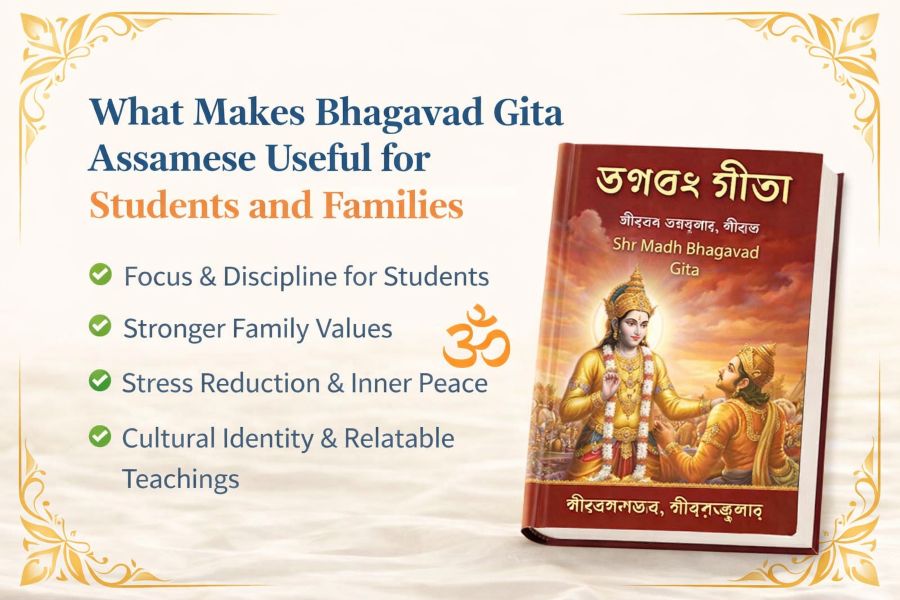
What Makes Bhagavad Gita Assamese Useful for Students and Families
The timeless teachings of the Bhagavad Gita have guided generations toward clarity, purpose, and inner strength. For readers in Assam, accessing these teachings through the Assamese version of Bhagavad Gita creates a deeper connection that goes beyond simple understanding. It allows both students and families to experience spiritual wisdom in a language that feels natural, emotional, and culturally rooted.
In today’s fast-paced world, where distractions, stress, and confusion are common, the Bhagavad Gita offers practical solutions. When presented in Assamese, these teachings become even more accessible, making them easier to apply in daily life—whether it is for academic focus, emotional balance, or family harmony.
Why Language Matters in Spiritual Learning
One of the biggest barriers to understanding spiritual texts is language. While Sanskrit carries the original essence, and English translations provide accessibility, neither always captures the emotional depth that a native language can offer.
For Assamese readers, the Bhagavad Gita in their own language creates an immediate sense of familiarity. Concepts that may feel complex in other languages become simple and relatable. This is especially important for students, who are still developing their understanding of philosophy and life.
Families also benefit from this accessibility. Parents can explain teachings to children more easily, creating meaningful discussions that strengthen both knowledge and relationships. The language becomes a bridge—not just between words and meaning, but between generations.
A Powerful Guide for Students: Building Focus and Discipline
Students today face constant distractions—social media, academic pressure, and uncertainty about the future. The Bhagavad Gita offers timeless guidance that helps build focus, discipline, and resilience.
One of the most relevant teachings is the principle of action without attachment:
“You have a right to perform your duty, but not to the results.” (2.47)
In Assamese explanations, this teaching becomes highly practical. It encourages students to focus on their studies and efforts rather than worrying about results or comparison with others.
This shift in mindset reduces anxiety and improves concentration. Instead of being overwhelmed by expectations, students learn to stay grounded and consistent.
Additionally, the Gita teaches self-control and discipline, which are essential for academic success. By understanding these principles in Assamese, students can apply them more naturally in their daily routines.
Emotional Strength and Mental Clarity for Young Minds
Modern education often focuses on external success but neglects emotional well-being. Students frequently struggle with stress, fear of failure, and lack of confidence.
The Bhagavad Gita addresses these challenges directly. It teaches that the mind can be controlled through awareness, discipline, and spiritual understanding.
In Assamese translations, these teachings are explained in a way that resonates deeply with young readers. They learn that emotions are temporary and that true strength comes from inner stability.
This understanding helps students:
- Manage exam stress more effectively
- Develop confidence in their abilities
- Stay calm in challenging situations
- Build a positive mindset
Over time, these benefits extend beyond academics, shaping a strong and balanced personality.
Strengthening Family Values Through Shared Reading
One of the most beautiful aspects of the Bhagavad Gita Assamese edition is its ability to bring families together. When parents and children read and discuss the text together, it creates a shared spiritual experience.
Families today often struggle with communication gaps due to busy lifestyles and digital distractions. Reading the Gita together encourages meaningful conversations about life, values, and responsibilities.
For example, discussions on dharma (duty) can help children understand respect, responsibility, and ethical behavior. Similarly, teachings on detachment can help families deal with conflicts more calmly.
The Assamese language plays a crucial role here. It allows every member of the family, regardless of age or educational background, to participate equally in discussions.
This shared learning strengthens emotional bonds and creates a positive environment at home.
Teaching Moral Values in a Practical Way
Moral education is often taught through rules and instructions, which may not always be effective. The Bhagavad Gita, however, teaches values through stories, dialogues, and philosophical insights.
In Assamese, these teachings become easier to relate to everyday situations. Children and adults alike can see how principles like honesty, compassion, and responsibility apply in real life.
For example:
- Dharma teaches responsibility toward family and society
- Karma Yoga encourages selfless action
- Bhakti promotes humility and devotion
- Jnana helps in understanding the true nature of the self
These teachings are not abstract—they are practical guidelines for living a meaningful life.
When families engage with these ideas regularly, they naturally become part of their daily behavior.
Reducing Stress and Creating Inner Peace at Home
Stress is no longer limited to adults; even children experience it due to academic pressure and social expectations. The Bhagavad Gita provides simple yet powerful tools to manage stress.
The concept of detachment, when understood in Assamese, helps individuals let go of unnecessary worries. It teaches that while effort is important, overthinking about outcomes leads to anxiety.
For families, this creates a calmer and more supportive environment. Parents become more patient, and children feel less pressure.
The practice of reading or reflecting on a few verses daily can bring a sense of peace and balance. Over time, this habit transforms the emotional atmosphere of the household.
Cultural Connection and Identity for the Next Generation
In a rapidly changing world, maintaining cultural identity is becoming increasingly important. The Bhagavad Gita in Assamese helps preserve this connection.
For young readers, it introduces spiritual concepts in a language they associate with home and tradition. This creates a sense of pride and belonging.
At the same time, it ensures that ancient wisdom remains relevant in modern life. Instead of seeing spirituality as something distant, children begin to view it as a natural part of their identity.
This balance between tradition and modernity is essential for holistic development.
Practical Application in Daily Life
The real strength of the Bhagavad Gita lies in its practicality. It is not meant to be read once and forgotten; it is meant to be lived.
For students, this means applying principles like discipline, focus, and detachment in studies. For families, it means practicing patience, understanding, and compassion in relationships.
The Assamese version makes this application easier by presenting teachings in a familiar and relatable way. Readers can quickly connect the lessons with their own experiences.
Even small changes—like staying calm during stressful situations or focusing on effort rather than results—can create a significant impact over time.
Encouraging Lifelong Learning and Spiritual Growth
The Bhagavad Gita is not limited to a particular age group. Its teachings evolve with the reader’s understanding.
For students, it provides guidance on discipline and focus. For adults, it offers deeper insights into purpose and spirituality. For elders, it brings peace and reflection.
The Assamese version ensures that this journey of learning is accessible to everyone. It encourages continuous growth, both intellectually and spiritually.
Over time, reading the Gita becomes more than a habit—it becomes a way of life.
Choosing the Right Edition for Maximum Benefit
To fully benefit from the Bhagavad Gita, it is important to choose a quality edition. A good Assamese version should include:
- Original Sanskrit verses
- Clear and accurate translations
- Authentic devotional explanations
These elements ensure that the teachings are understood correctly and experienced deeply.
A well-structured edition also makes reading more engaging, encouraging consistency and long-term learning.
Final Thoughts
The Assamese version of Bhagavad Gita is a powerful tool for both students and families. It simplifies profound spiritual teachings, making them accessible, relatable, and practical.
For students, it builds focus, discipline, and emotional strength. For families, it strengthens relationships, values, and inner peace. For society as a whole, it preserves cultural identity while promoting personal growth.
In a world filled with distractions and challenges, the Bhagavad Gita remains a timeless guide. And when understood in one’s own language, its impact becomes even more meaningful—transforming not just individuals, but entire families.

spiritual Writer