Bhakti Rasamrita Sindhu: Complete Guide to Devotional Philosophy
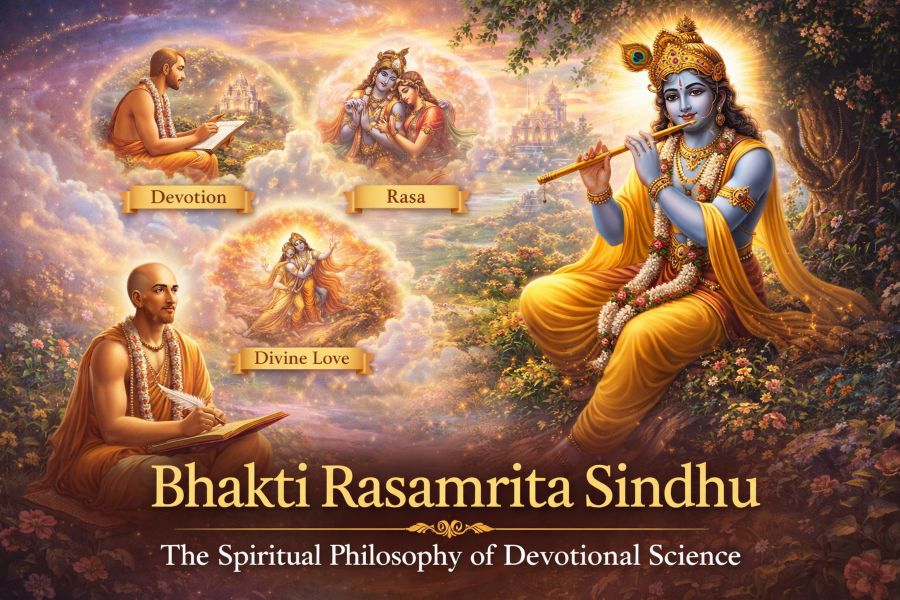
The Spiritual Philosophy of Bhakti Rasamrita Sindhu
The path of devotion in Vedic tradition is not sentimental or abstract—it is a structured, deeply philosophical system that guides the soul toward its ultimate purpose. Among all devotional texts, Bhakti Rasamrita Sindhu stands as one of the most authoritative and systematic works explaining the nature, stages, and experience of bhakti (devotional service).
For those who want to understand the Devotional Philosophy science in Bhakti Rasamrita Sindhu, this sacred text offers a complete framework that combines emotion, discipline, and transcendental realization. Written by Srila Rupa Goswami, a principal disciple of Sri Chaitanya Mahaprabhu, the text presents bhakti not merely as faith, but as a precise spiritual science that can be practiced, experienced, and perfected.
This article explores the spiritual philosophy embedded within Bhakti Rasamrita Sindhu, uncovering its depth, structure, and relevance in modern life.
What is Bhakti Rasamrita Sindhu?
Bhakti Rasamrita Sindhu, translated as “The Ocean of the Nectar of Devotion,” is a foundational text in Gaudiya Vaishnavism. It systematically explains how devotion develops from initial faith to the highest stage of divine love (prema).
Unlike many spiritual texts that remain philosophical or poetic, this work is highly structured. It categorizes devotion into stages, defines practices, and explains emotional transformations in a clear and logical way.
The uniqueness of this text lies in its ability to harmonize emotion and discipline. It shows that devotion is not blind faith—it is a conscious, progressive journey guided by principles and realizations.
The Definition of Pure Bhakti
At the heart of Bhakti Rasamrita Sindhu is a precise definition of pure devotion:
“Pure devotional service is the cultivation of activities meant exclusively for the pleasure of Krishna, free from all material desires and not covered by karma or jnana.”
This definition sets a very high standard. Bhakti is not mixed with personal ambition, intellectual pride, or material gain. It is purely centered on pleasing the Supreme.
This concept transforms the understanding of spirituality. Instead of focusing on self-improvement alone, bhakti shifts the focus toward selfless service and divine connection.
The Three Levels of Devotional Practice
Rupa Goswami categorizes bhakti into three main stages:
1. Sadhana Bhakti (Regulated Practice)
This is the initial stage where devotion is practiced through discipline. It includes activities like chanting, hearing scriptures, worship, and association with devotees.
Sadhana bhakti is essential because it trains the mind and senses. At this stage, devotion may not be fully spontaneous, but it is guided by determination and faith.
2. Bhava Bhakti (Spiritual Emotion)
As practice deepens, devotion transforms into genuine spiritual emotion. This stage is marked by softness of heart, detachment from material desires, and a constant remembrance of Krishna.
Bhava is the beginning of real spiritual experience—it is no longer mechanical but deeply felt.
3. Prema Bhakti (Pure Love of God)
This is the highest stage, where devotion becomes pure, intense, and unconditional love. In this state, the devotee lives entirely for Krishna, experiencing profound joy and divine connection.
Prema is not achievable through effort alone—it is a gift of divine grace that arises from sincere practice.
The Concept of Rasa: The Taste of Devotion
One of the most unique contributions of Bhakti Rasamrita Sindhu is the concept of rasa, or spiritual flavor.
Rasa refers to the emotional relationship between the devotee and Krishna. It is not material emotion but a purified, eternal experience of love.
Five Primary Rasas
Shanta (Peaceful) – appreciation of Krishna’s presence
Dasya (Servitude) – serving Krishna as a master
Sakhya (Friendship) – relating to Krishna as a friend
Vatsalya (Parental Love) – loving Krishna as a child
Madhurya (Conjugal Love) – the highest and most intimate relationship
These rasas define the individuality of devotion. Each soul has a unique relationship with the Divine, and bhakti allows that relationship to fully blossom.
The Role of Discipline in Devotion
While bhakti emphasizes love, it does not reject discipline. In fact, Bhakti Rasamrita Sindhu outlines 64 forms of devotional practice, including:
Hearing about Krishna
Chanting His holy names
Worshipping the deity
Serving devotees
Living in holy places
These practices create a foundation for spiritual growth. They purify the heart and gradually awaken genuine devotion.
Without discipline, devotion may remain emotional but unstable. With discipline, it becomes deep, steady, and transformative.
The Obstacles in Bhakti
Rupa Goswami also identifies obstacles that hinder spiritual progress. These include:
Offenses (Aparadha) – especially against devotees
Material attachments – desire for pleasure or recognition
Inconsistency in practice
Pride and ego
Recognizing these obstacles is crucial. Bhakti is not just about positive actions—it also involves removing internal barriers that block spiritual growth.
The Role of Association (Satsanga)
One of the most emphasized principles in Bhakti Rasamrita Sindhu is the importance of association with devotees.
Spiritual progress is not meant to be isolated. By associating with advanced practitioners, one gains:
Inspiration
Guidance
Correction
Emotional strength
Satsanga acts as a catalyst, accelerating the journey from practice to realization.
The Transformation of Consciousness
Bhakti is ultimately about transformation—not external, but internal.
As one progresses:
The mind becomes peaceful
Desires become purified
Ego diminishes
Compassion increases
This transformation is gradual but powerful. It reshapes one’s perception of life, relationships, and purpose.
Bhakti vs Karma and Jnana
Bhakti Rasamrita Sindhu clearly distinguishes bhakti from other spiritual paths:
Karma (Action-Based Path)
Focused on results and duties, often tied to material outcomes.
Jnana (Knowledge-Based Path)
Focused on intellectual understanding and detachment.
Bhakti (Devotion-Based Path)
Centered on love, surrender, and personal connection with the Divine.
While karma and jnana have their place, bhakti is considered the highest because it directly engages the heart and establishes a personal relationship with Krishna.
The Relevance of Bhakti in Modern Life
In today’s fast-paced and stressful world, the teachings of Bhakti Rasamrita Sindhu are highly relevant.
People often struggle with:
Anxiety and mental pressure
Lack of purpose
Emotional instability
Disconnection from spirituality
Bhakti offers a solution that is both practical and profound. Through simple practices like chanting and hearing, one can experience inner peace and clarity.
It does not require renouncing the world—it requires transforming one’s consciousness within it.
The Psychology of Devotion
From a modern perspective, bhakti can also be understood as a powerful psychological process.
It replaces negative emotions with positive spiritual feelings
It provides a sense of belonging and connection
It reduces ego-driven stress
It creates emotional resilience
This makes bhakti not only spiritually uplifting but also mentally stabilizing.
The Ultimate Goal: Love Beyond Liberation
Unlike other paths that aim for liberation (moksha), bhakti goes beyond liberation.
The goal is not just freedom from suffering, but active participation in divine love.
This is a radical concept:
Liberation is not the end
Love is the ultimate destination
In bhakti, the soul does not merge with the Divine—it engages in a loving relationship with Him eternally.
Conclusion: The Ocean of Devotional Nectar
Bhakti Rasamrita Sindhu is not just a book—it is a complete guide to understanding and experiencing divine love.
Its teachings reveal that devotion is not blind emotion, but a refined science that leads to the highest realization of life.
By following its principles, one can move from practice to emotion, from emotion to love, and from love to eternal connection with the Divine.
Ultimately, the message is simple yet profound:
The soul’s true fulfillment lies not in control, knowledge, or achievement—but in pure, selfless love for the Supreme.

spiritual Writer